Author Archives: Deborah Drucker

Unknown's avatar

About Deborah Drucker

I am a native of California who lives in Southern California. I have a background in healthcare and Special Education. Writing is a new adventure for me.

What is Old?

The Changing Definition of a Full Life by Luke Yoquinto and Joseph Coughlin in The Atlantic and other articles like When Did I Get Old by Alice Fisher M.A. M.S.W. on her blog The Radical Age Movement really resonate with my own thinking and experience. Both articles are asking the questions, How old is old? What does old look like nowadays? How do we treat those we consider old?

I am actively seeking out more articles like these because I think this topic is long overdue for discussion. In the first article the authors discuss how people in their late sixties are not really “old” these days. They use the example of David Bowie and how his death, at 69,  was viewed as coming too soon and that he was still very active as an artist right up to his death.

In the second post from Alice Fisher, she writes about a discussion with a friend. She and her friend, Karen, are both 70. They talk about how they are treated differently by people and feel old when they internalize the negative messages and stereotypes in society and in the media. This can be dangerous, Fisher says, because when people internalize the negative messages it can affect their health and longevity. She continues and cites a study:

“We are segregated.  We are marginalized.  We are oppressed.  And all this can easily become internalized as feelings of worthlessness.  Becca Levy, Ph.D., a psychologist and doctor at Yale University, has done quite a bit of research in this area.  Her results demonstrate that older people who are subject to negative stereotypes of ‘old’ are not only mentally but also physically less resilient than those who see ‘old’ as a positive stage of life.  Older people who internalize the negative stereotypes are more likely to shorten their life span.”

There was a part of Fisher’s post that really struck a cord with me. Her friend Karen says that,  “when I’m doing something that requires the least amount of physical agility, there is always someone who wants to help me even though I’m capable of doing it myself.” I felt like laughing because I recognized this as an experience I had at my yoga class. A woman kept helping me put away my yoga props after class. It started to make me feel uncomfortable. I finally said to her one day, “Why do you keep helping me, do I look disabled or something?” She really made me uncomfortable and I thought to myself, ” Do I look 100?” Then I thought maybe I am being too sensitive and now she thinks I am nuts. But after reading this post by Alice Fisher, I am thinking I was right in my interpretation.

I think the stereotyping and negative messages can make us less resilient because it wears us down. You are often confronted with it when out in society ( and at yoga class) and feel you must shield yourself against this onslaught.

I do think things will be changing but it is hard to have to live through the transition. And I really don’t want my longevity cut short by this stuff.

Anger about Substandard Jobs in America

“The reality that tens of millions of American workers — black and white — are stuck in substandard jobs has finally broken through into mainstream political and economic discourse. The fact was obvious if you just went out and spoke to ordinary Americans, but it wasn’t showing up in the usual economic data….Virtually all of the net jobs created in the past decade are “non-standard” — temp, part-time, contract work, or something other than a traditional job with a normal paycheck.“-Robert Kuttner , co-founder American Prospect

This is from an article on the Huff Post , “Race, Class, Jobs and the 2016 Earthquake.” Some of the powers that be have figured out what is going on with our job situation in the US and it is not good.

Featured image of Colonel Saito from the film “Bridge on the River Kwai” via noslelnad7 on Flickr.


Ronnie

My friend Dan Antion told me about this NPR interview with Ronnie Spector, originally Ronnie Bennett, lead singer of The Ronnettes. I had recently posted about their famous Rock and Roll song “Be My Baby.” She just released a new album. In the interview she talks about some of her memories of the Beatles and the Rolling Stones.

Here is the audio of the interview from NPR:

http://www.npr.org/player/embed/472540745/472784835

I noticed there is a book that she wrote about her life:

Image of Ronnie Spector autobiography via Amazon.com


Expectancy

Have you heard all the talk about how we have a whole new stage of life nowadays after the good old traditional age of retirement of 65. I have read all these estimates that we could have 20 years or more to live after the age of 65. So people are pondering what we should and could do with the extra time. Then I read Life in the Boomer Lane’s post about my generation, the Baby Boomers, where she shares that our original life expectancy, calculated at the year we were born, was around 70. This did stop me in my tracks, because I am getting close to that age. What are you saying?  I could die in a couple of years? What happened to my 20 extra years? I even had posted a link to life expectancy charts I had found on Wikipedia in one of my previous posts. Life in the Boomer Lane pointed out that those charts were for people born in the past few years. YIKES! Then she said if your alive now there is a different way of calculating the years you have left.

OK, this got me researching how we get these life expectancy numbers. I found out it is based on statistics, and mathematical formulas, and my head might explode trying to understand it. But I did find the US Social Security Actuarial Tables that predicts, ( with the help of some other mathematical formula), using your age in 2011, how many more years you probably have left. It was very encouraging that it showed I may have those 20 years back again.

You might say, as I do, that no one really knows for sure how long any of us have to live. I just prefer to think I have those 20 years left to go. I think we need to make a conscious effort not to take life shortening statistical predictions to heart because if we buy into them as being absolute it might be a self fulfilling prophesy.

Beatrice Wood  ,a famous artist who lived to 105, attributed her longevity to “art books, chocolates, and young men.”  That sounds pretty good, especially the chocolates.

Featured Image, Muir Woods paved hiking trail, is courtesy of SCEhardt on Wikipedia.


Be My Baby

It was 1963, I was 14 years old when one of the most popular girl groups, The Ronettes, released “Be My Baby.” The lead singer was Veronica Bennett, with backup from her sister Estelle Bennett and cousin Nedra Talley. Be My Baby was inducted into the Grammy Hall of Fame in 1999 and The Ronnettes were inducted into the Rock and Roll Hall of Fame in 2007. They were the only girl group to tour with the Beatles.

I used to rock out and sing along with this song as a teenager and I still do. I used to have the beehive hairdo and the black eyeliner as well.


TheRonettesBeMyBaby

The_Ronettes_1966

You Tube video courtesy of Haagsesjonny. Photos courtesy of Wikipedia. This post is for Stream of Consciousness Saturday hosted by Linda G Hill. Today’s prompt is “be.”


SoCS badge 2015

One Liner Wednesday-Yoga Stress Syndrome

“It is hard when your yoga instructor decides to teach the class a bunch of new poses that you are not able to do very well.”

It is called Yoga Stress Syndrome. This is when you go to an hour-long yoga class and are unable to do most of the poses the class is doing that day and you leave there more stressed than before.


#1linerWeds badge by nearlywes.com

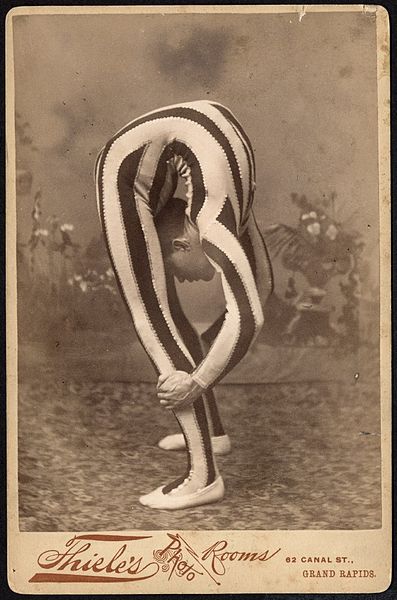
One Liner Wednesday is hosted by Linda G Hill. Featured image is from George Eastman House in Rochester New York on Wikimedia.

An AI-Written Novella Almost Won a Literary Prize

via An AI-Written Novella Almost Won a Literary Prize

I have to stop reading these emails from Smithsonian.com. All right, I know, I just posted something about robots but this is starting to really get to me. For those of you that say a creative person has nothing to worry about with a robot taking your job…..

My question is why would you want a robot to write a novel?

When Robots Take Our Jobs, Should Everyone Still Get a Paycheck?

“…. tech anxiety got a fresh jolt last month when the White House sent out a Council of Economic Advisers report including a projection that people making less than $20 an hour have an 83 percent chance of eventually losing their jobs to a robot. The odds for those earning up to $40 an hour are more than 30 percent.”

via When Robots Take Our Jobs, Should Everyone Still Get a Paycheck? | Innovation | Smithsonian

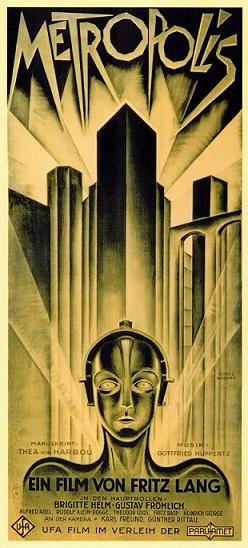
Like I didn’t have enough to be depressed about in the world today, I spotted this story in my email. It is not the first time I have read about robots taking over many jobs now done by humans. Science Fiction authors have  written about this for a long time. In 1927, there was a film Metropolis, that depicts a class of poor workers , under the city, running the machines that keep society going and then a human like robot is created.

This idea of robots taking over so many jobs is creepy. I really don’t see robots being as good as or better at being human. There are certain jobs where I do not think they can adequately replace humans such as the caring professions. Would you want a robot caregiver, a robot Nurse?

The Smithsonian article also talks about Universal Basic Income ( UBI) where the government would pay everyone a basic amount to live on after the robots take over. Countries are doing studies now to see how this will work.

If you could be guaranteed enough to live on, what would you do with your life? The Universal Base Income would probably be a small amount of money, not like winning the lottery, just enough to meet your basic needs. I can see certain factions in the US not wanting to support the UBI. The same ones that want to abolish Social Security.

Read more about “The Fourth Industrial Revolution” from these articles posted on Drudge this morning:

LA Times

Wall Street Journal

Let’s Rock Age

I feel a disturbance in the force…things are beginning to shift. Change is coming. In the UK we have AONR ( Age of No Retirement) that is working with older people and companies to “develop prototype programs designed to smash age barriers: to define “retirement” and “seniors” differently and to give older people a voice in new-product development.”

“The reality is that those who live longer are increasingly seeking work, not only to generate income but for a sense of purpose and fulfillment. Many people don’t want to simply retire and garden for 30 years. They’re looking for more.”-Jonathan Collie MD

Then in the US we have a new book by Ashton Applewhite , “This Chair Rocks: A Manifesto Against Ageism.”  It is on my list to order from B&N.

I agree with Ashton Applewhite that we can feel alone in facing our ageing and that it would be very positive to have a dialogue about our experiences. At any rate, I am happy to see more light shown on this topic.

And I found this blog: The Radical Age Movement: Confronting Ageism. I enjoyed reading their posts. I like their New Year’s Resolution:

  • Continue to confront ageism wherever we see it
  • Create language that honors longetivity

  • Increase pride in aging

  • Work toward building an interdependent society

  • Speak up against age prejudice in our workplace, healthcare, the media, and among our friends and family


This movement is long overdue. I will not be sorry to see the negative stereotypes about ageing finally put in their proper place, (the trash).