Category Archives: Blogging

Castle Keep

A keep is a tower used as a dungeon or fortress. Nenagh Castle keep is what is left of many towers that were part of the original castle built in 1216 by Baron Butler. He was given this land by the King of England, who was a Norman king. The castle was built in O’Kennedy territory, John F. Kennedy’s ancestors.

I have been doing a little research on a part of Tipperary, Ireland which was the last known residence of a cousin and the supposed birthplace of my paternal grandparents. The address for the cousin was Ballinamoe New Town Nenagh Tipperary. I couldn’t understand all the names in the address.  Turns out it breaks down to Ballinamoe as townland,  Newtown is a hamlet, part of the barony of Owney and Arra, the civil parish of Youghalarra, Nenagh is the largest town, in the county of Tipperary, in the Provence of Munster. Reading some of the history of baronies and all these other designations has been mind-boggling. Nenagh Castle is a historic site in Tipperary. I once read that my father’s surname Barry was Norman, which now makes sense if this was once Norman territory.

So enough with the history and geography for now and I only skimmed the surface. It has been disheartening to try to trace my father’s family in Ireland. There is no record online of my grandfather’s birth. There was one entry for someone with a similar name to my grandmother but no way for me to verify it was her. The dearth of information could be because some church records have not been digitalized, the Irish revolution that occurred in 1919-1921, and a fire during the Battle of Dublin resulted in archives being lost. Many records may still be in churches, and the only way to find them is to go there. The history of my father’s family in California is easier to trace although I did not find anything about his Uncle Joe and descendants.  I can research newspaper archives in Ireland, but I have to pay a subscription of 30 (pounds) a month, currently $42.45 US. I can pay someone to the do the research for me and that sounds even more expensive. The most recent Irish census information available is from 1911. In that census I did find a name of a girl who could be my cousin but how to verify it? and that person had sisters. I had a letter from my paternal aunt (now deceased) who gave me some names and birthdates. She told me my grandfather had brothers and my grandmother had 3 sisters and one brother. My grandparents emigrated to the US with their baby son in 1902. They lived through the San Francisco earthquake in 1906. My aunt corresponded with the cousin in Ballinamoe. She indicated the family in Ireland probably died out with that cousin but not sure. Two of my paternal grandmother’s sisters emigrated to Canada. Haven’t started looking for them yet.

My mother’s parents came from Canada. My maternal grandmother was born in Scotland. I found a record of my maternal grandparent’s marriage in Nova Scotia and possibly my maternal grandfather’s family of origin. My mother and her sister lost touch with these relatives. It is sad to think about all these people who have disappeared without a trace. It feels like I have lost part of my family all over again.

We should keep more than our towers.


Stream of Consciousness Saturday is hosted by Linda G Hill. The “Friday prompt for Stream of Consciousness Saturday is “picture.” Write about, or theme your post on the first picture you see when you sit down to start writing. You don’t need to describe the picture necessarily–you can even put yourself in it if you’re not already there.”

Featured image of Nenagh Castle by Regina Hill via wikimedia.org
Rainy Day Rabbit

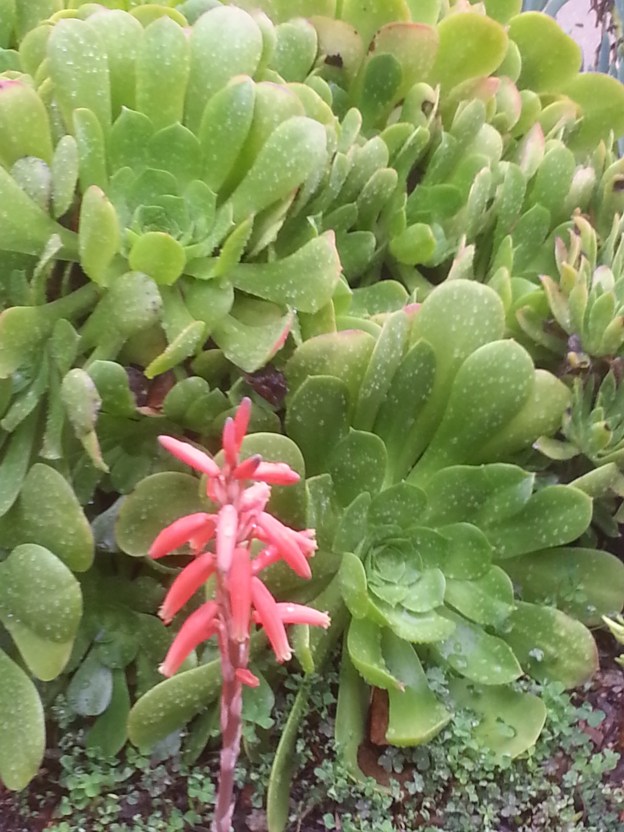
I have mentioned my backyard visitor before and how hard it is to capture him/her with my cell phone camera. Usually, it spots me at the window and hops off. But today I was able to get several pretty good photos of the little guy. We had steady rain this morning for over two hours at least, which is great for us in my section of Southern California. I spotted the rabbit taking shelter from the rain under one of our succulent plants. Then after the rain stopped, it came out and munched on the assorted ground cover for a bit. I have seen it hop about 2 feet up to a retaining wall in the yard, but today I have photographic evidence of this ability.

The Green

via Missouri History Museum

Saturday, March 17 is St. Patrick’s Day and there is a tradition here in the US to wear a bit of the green to denote you are Irish, in spirit at least. I tell myself I should learn more about my Irish roots. My father’s family came from Tipperary but we were never in contact with anyone from there, except my paternal aunt corresponded with a cousin but my aunt is deceased, and I am sure the cousin is too. There could be some descendants there. I tried looking up the town on a map of Ireland and could not find it. It might have been my aunt’s penmanship or mis-spelling. She had Ballinamoe, New Town Nenagh, Tipperary as the address of the cousin. Any advice on how to find family in Ireland? Then there’s my mother’s family who came from Canada….

Let’s have a glass of Guinness with Dervish performing ‘Swallow’s Tail’ on You Tube:


The Irish language is very interesting and hard for me to pronounce. It is possible my ancestors spoke Gaelic.

I have heard it is good for our brains to learn a new language. So I was interested in an opportunity I found on Twitter. I can learn Klingon for free. Sounds like fun, but I hope they have an audio part because I am not sure how to pronounce it. It’s quite a tongue twister. Might be easier to learn Gaelic. Learn Irish on duoLingo.

Happy St. Patrick’s Day! 


Stream of Consciousness Saturday is hosted by Linda G Hill. Today’s prompt is ‘green.’ Dancing shamrocks from Google on giphy.com


So Far

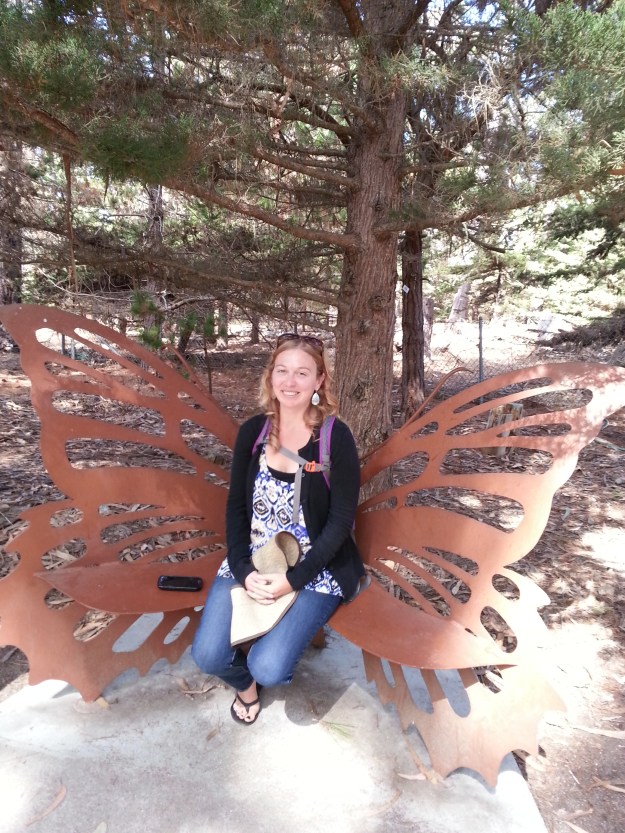
From her 1971 Tapestry album, Carol King turned 76 this February. The year 1971 was when I started Nursing School at UCSF.  Seems far away now. “A long time ago, in a galaxy far, far away.” Then sometimes it seems like yesterday.  Now the lyrics make me think of my daughter who lives in Northern California. I look forward to seeing her face at my door soon.

20151010_131409  A Beautiful Butterfly

Beautiful Daughter


Stream of Consciousness Saturday is hosted by Linda G Hill. Today’s prompt is ‘so far.’

About Those Pesky Mistakes In Writing

“No matter what type of writing you do, it can be easy to miss your own mistakes in the editing process. Since you wrote the words, you often read what you intended to write (and not what is actually written). You can’t see any flaws in your writing because you’re just too close to it.”-Allison Vannest on Grammarly.com

I just wrote a post on Stream of Consciousness Saturday about my frustration at missing errors or omissions in my writing of a short story I wanted to submit for a writing challenge. Part of the problem may have been some fatigue, and when I finish a post, I like to publish it pretty quickly. I was not taking enough time for proofreading and editing. So I had submitted my story and then discovered some mistakes. It was embarrassing, and I reached out to the hosts of the website, but there was nothing to remedy it. One error was that I left out a preposition which caused a sentence to not make sense. I could have sworn I had typed the word, but it was probably in my brain and not getting transferred to my fingers. I had re-read my story a few times, but each time I missed the errors. I later realized that in my hurry to submit the story I did not do a good job at all.

I did some brief research and found a handout online on editing and proofreading with some suggestions that explained how this kind of thing can happen even though I was reading over my writing. The handout states, “When you read silently or too quickly, you may skip over errors or make unconscious corrections.” Unconscious corrections, I wrote about this in my SOC post on Saturday, our brains will fill in or correct what is on the page as we read. So the handout suggests, and as a friend writer commented on my post, “try reading out loud, which forces you to say each word and also lets you hear how the words sound together.”  There were some other tips for checking spelling, punctuation, and grammar. Another suggestion was to separate the text into individual sentences and “altering the size, spacing, color, or style of the text may trick your brain into thinking it’s seeing an unfamiliar document, and that can help you get a different perspective on what you’ve written.”

Grammarly has been recommended to me by a couple of writers, and I have added it to my computer. Wondering if this automated proofreader is better than asking a fellow human to check my writing. A reason why I am leery of another human (editor) checking my writing is that it feels a bit intrusive. You need to trust the person to be sensitive and hopefully supportive. A disturbing thought about automated editors like Grammarly, it is changing your writing. I’m not talking about correcting spelling or punctuation so much but if it suggests different words or styles like the Premium version claims it does. So is it really your writing after it gets through?

I proofread my short story with Grammarly Premium, and I found more errors. My most frequent one was leaving out commas, then I had some repeat words. Grammarly did not discover the mistake that I found myself, which had completely messed up one of the sentences. So even though my sentence was grammatically correct, it was still wrong. WordPress proofreader missed a lot more.

I am definitely going to put some of these suggestions to work and keep using Grammarly for now. Have you run into a problem with missed errors in your writing and what tools have you found helpful to address it? Do you prefer human or automated editors?


“Editing and Proofreading Handout,” The Writing Center, University of North Carolina, Chapel Hill.

“5 Tips for Editing Your Own Work,” by Allison Vannest on Grammarly.com ( similar but fewer tips than The Writing Center Handout but also recommends using Grammarly).

Featured Image ‘Anna Brassey, Victorian Woman Writing Journal,1883’ via wikimedia.org

Insecure Writers Support Group, #IWSG, Co-Hosts: Mary Aalgaard, Bish Denham,Jennifer Hawes, Diane Burton, and Gwen Gardner!

Uptight About My Writing

28276946_1554414687946153_5577573313766171049_n

This funny little thing ( from Nanea Hoffman on Sweatpants and Coffee.com) popped up on my Facebook page yesterday and I wanted to share it. Don’t get the idea I am so compulsive about folding socks but I know some people who are compulsive about things like this and I will not mention names.

One thing that has been bugging me lately is that I have been looking for a new writing group on WordPress or elsewhere where I can contribute Flash Fiction and I found a couple of new places and I think they went out of business right after I posted some stuff. I hope I wasn’t the cause of this but it was disappointing.

Another thing is: Don’t you hate it after completing a post and thinking you have checked it thoroughly for errors and submitted it, you are reading it again and find errors, like you left out a word that totally changes the meaning of a sentence. And you didn’t notice it before.

It’s something about the brain seeing what is supposed to be there and it really isn’t. “You only thought you were reading the passage perfectly, because you automatically (and subconsciously) went back and filled in any gaps in your knowledge based on subsequent context — the words that came later.” (Live Science) from the post “Breaking the Code:

Why Yuor Barin Can Raed Tihs

The above post demonstrates how words can even be jumbled and numbers substituted for letters and we can still raed (read) the text. I was kind of hoping that a person reading my submission would automatically fill in the gaps but I did send them an email and fess up to it.

Is it because I think my writing should always be perfect? Everyone makes these kind of mistakes don’t they? What are you supposed to do if your brain is automatically correcting  errors and filling in words that aren’t there. Please tell me everything is going to turn out just fine.


Stream of Consciousness Saturday is hosted by Linda G Hill. “Your Friday prompt for Stream of Consciousness Saturday is “fine.” Use it any way you’d like, bonus points if you use it as the last word of your post. Have fun!” GIFs via Giphy.com. Featured image by www_slon_pics on Pixabay.com


Walking Through Doors

Walking through doors that are not your own could be a metaphor for entering into unfamiliar territory or something that is outside your comfort zone. I do that a lot in my fiction writing. My characters do things, say things, and get into situations that I would probably not want to do. I just wrote a flash fiction piece where the main characters decided to go caving which involved rappelling into a deep cavern. In another story one of my characters used special gear to climb up 150 feet to the top of a redwood tree. It is fun to research what I need to make these situations real and I like imagining someone (else) doing these things. That is what is so fun about fiction writing. You can imagine people doing so many interesting things and create their worlds. The writer stands at the door to these worlds and holds the key.


Stream of Consciousness Saturday is hosted by Linda G Hill. Today’s prompt is “door.” Write about a door you walked through this week that wasn’t your own. Enjoy!

‘Walking through door’ GIF by giphy.com

Women Can Do Science

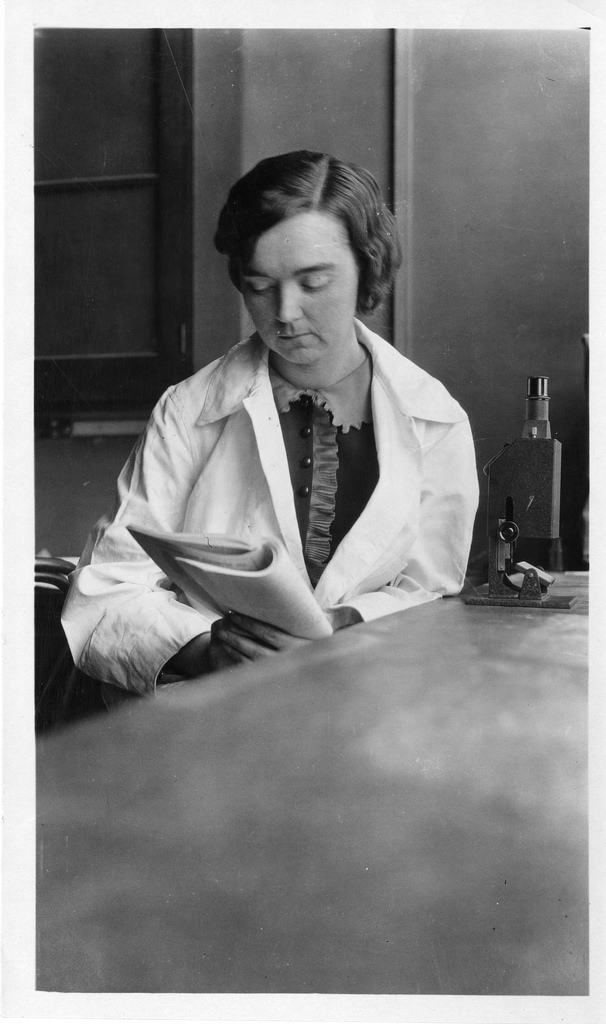
You may think I went a tad overboard this month, and I probably did, but I wanted to shine a big light on the issue of gender equity in STEM careers. I am sharing stories about women in science who have had to overcome stereotypes about their gender to pursue careers in science. I am in awe of these women who continued studying and working in spite of all the barriers in their path. Part of the problem besides outright prejudice and discrimination may be that we do not read about these women in the media as often as we read about male scientists. So I mentioned two journalists who decided to analyze and remedy the lack of gender equity in their reporting. And I included what some organizations and companies are doing to bring more women into careers in the sciences. The stories about women in science definitely demonstrate resilience of the human spirit.

Nancy Grace Roman was told women can’t be scientists. It is a good thing she didn’t listen to that opinion. Here is a short video about Dr. Roman’s story in her own words courtesy of NASA’s Goddard Space Flight Center/Katrina Jackson.

In the video Dr. Roman states that people are often not interested in how things got started. I think because we don’t read or hear stories about women in science we assume they don’t exist. Ed Yong in his Atlantic article talks about gender imbalance in science reporting. He talks about how he realized he was leaving women scientists out of his reporting and how he made the effort to remedy that. He mentions an example of his own writing in December 2015 about a conference on CRISPER, where he quotes six men and one woman which might indicate a lack of women working in the field. He writes this was:

“…all the more egregious because the CRISPR field is hardly short of excellent, prominent female scientists. Indeed, two of the technique’s pioneers, Emmanuelle Charpentier and Jennifer Doudna, are women, and both of them spoke at the same conference from which I reported. And yet, if you read my piece, you could be forgiven for thinking that CRISPR was almost entirely the work of men.”-Ed Yong

If we never read about women in science, it is like they do not exist. He mentions his colleague Adrianne LaFrance who did a study with the help of a computer scientist at MIT on the proportion of women scientists she had been including in her articles and found it was much lower compared to men. She says:

“These numbers are distressing, particularly because my beats cover areas where women are already outnumbered by men—robotics, artificial intelligence, archaeology, astronomy, etc. Which means that, by failing to quote or mention very many women, I’m one of the forces actively contributing to a world in which women’s skills and accomplishments are undermined or ignored, and women are excluded.”-Adrienne LaFrance

You might argue that more women scientists do not exist or are less qualified to be quoted. Yong found this was not the case he just needed to look in the right places.

“It is getting increasingly easy to find such people. The journalist Christina Selby, writing at the Open Notebook, compiled a list of tips for diversifying sources. The journalist Mollie Bloudoff-Indelicato created Diverse Sources, a searchable database of underrepresented experts in science. 500 Women Scientists, a nonprofit, created Request a Woman Scientist, a similar (and larger) database. Both can be filtered by country, specialty, and more. Several scientists have compiled lists of women in microbiology, astronomy, physics, evolution, political science, neuroscience, and more. I keep a personal list of women and people of color who work in the beats that I usually cover. And if these all fail, the most basic journalistic method always works: Ask someone. Get people in the field to suggest names.”-Yong

Women in STEM sciences at NASA, web site has profiles and links to resources for girls and boys.

Women at JPL

And you may have heard some buzz about how women don’t belong in Tech or do well in Tech. Here is a bit about that:

GE announced the goal of having 20,000 women in STEM jobs by 2020.

And TED Talk by Kimberly Bryant founder of Black Girls Code. Ms. Bryant wants to encourage women and girls of color to pursue careers in tech and is helping with her nonprofit:


We Are The World Blogfest, #WATWB, hosted by Belinda Witzenhausen, Emerald Barnes, Eric Lahti, Inderpreet Uppal, Lynn Hallbrooks, Mary Giese, Michelle Wallace, Peter Nena, Roshan Radhakrishnan, Simon Falk, Susan Scott, Sylvia McGrath, Sylvia Stein. We Are The World Blogfest is a monthly blog occurring the last Friday of each month dedicated to sharing positive news of the world “stories that show compassion and the resilience of the human spirit. Sharing these stories increases our awareness of hope in our increasingly dark world.”

*Featured Image at top of page: “Mary Van Rensselaer Buell (1893-1969), sitting in lab with microscope, reading paper” from Smithsonian Institute via Flickr. Creator/Photographer: Julian Scott Description: In 1919, Mary Van Rensselaer Buell (1893-1969) became the first woman to earn Ph.D. in biochemistry at the University of Wisconsin. She carried on her extensive research on nutrition and physiological chemistry at University of Iowa, Johns Hopkins University, Washington University, and the University of Chicago.

We Are the World Blogfest

His And Hers Skating

His arms lift her above it all, spin, and then release her.

This slideshow requires JavaScript.


Stream of Consciousness Saturday is hosted by Linda G Hill. Today’s prompt is: “his/her(s).” Use one, use both, bonus points if you start your post with one and end with the other. Have fun!  Slide show of Sarah Rose and Joseph Goodpaster at Lillehammer 2016 by Clément Bucco-Lechat on wikimedia.org, Sarah Rose and Ian Meyh at US Nationals 2018 by icenetwork on You Tube.