Author Archives: Deborah Drucker

Unknown's avatar

About Deborah Drucker

I am a native of California who lives in Southern California. I have a background in healthcare and Special Education. Writing is a new adventure for me.

The Difference Called ADD

What does it feel like to have ADD?

Click image to slideshow by Additude Magazine

ADHD is like a browser with 600 tabs open, each to a different website.”–adult with ADD

“No matter how clever the alien becomes at attempting to pass as an earthling, some telling awkwardness in his manner, some fatal expression of his true nature will, in unguarded moments, betray him for what he is: “different.”–Gabor Mate M.D. in Scattered

To say someone with ADD has a deficit of attention is a misnomer. People with ADD have a deficit of attention for something that does not interest them. They have an abundance of attention for many things. I think that has been called curiosity.

In his article, Secrets of the ADHD Brain, William Dodson M.D. states “ADHD is not a damaged or defective nervous system. It is a nervous system that works well using its own set of rules. Despite ADHD’s association with learning disabilities, most people with an ADHD nervous system have significantly higher-than-average IQs. They also use that IQ in different ways than neurotypical people. By the time most people with the condition reach high school, they are able to tackle problems that stump everyone else, and can jump to solutions that no one else saw.”

I don’t like calling ADD a “condition” either because that makes me think of illness. I prefer calling it a difference. I do think kids can have trouble functioning in school with ADHD if they are not helped to develop coping skills to adjust their temperaments and differences to the neurotypical, linear thinking environment.  Teachers can make accommodations and modifications in the classroom and work load to help kids with ADHD engage and manage with their school work requirements.

” Far from being damaged goods, people with an ADHD nervous system are bright and clever. The main problem is that they were given a neurotypical owner’s manual at birth. It works for everyone else, not for them.” (Dodson)

SOCS-Very/Vary Musing

images Clean, Water Faucet pixabay

“You can’t just turn on creativity like a faucet. You have to be in the right mood.
What mood is that?
Last-minute panic.” –Bill Watterson

This is how I  often sometimes feel when requested to respond to a writing prompt. Is it my rebellious nature? The prompt today is to write about the words very/vary.

I admit the word “very” is useful. It allows me to indicate or describe something that is not average or a matter of greater degree in various categories.

Very happy, very sad, very angry,

Very easy, very difficult, very hard, very frustrating,

Very big, very small, very much, very little,

Very hot, very cold, very sunny, very rainy, very stormy, very…

Or for extra emphasis, to show an extreme, I can use it twice like in the lyrics to the song by Nat King Cole, “Love”, when he sings ” V is very, very extraordinary.”

If something is “very” it does sound more dramatic and intense. It does help describe a greater depth and breadth of feeling about something. Very is an ordinary word for something extraordinary.

|LindaGHill|

socs-badge

Age Like an Okinawan

Senior Planet alerted me to a You Tube video of Dr. Andrew Weil talking about longevity in Okinawa. Many of us have read about “Blue Zones” or regions of the world known for centenarians. Many things have been written about the diets and philosophies of the people in these zones in hopes that we may emulate them.

Dr. Weil discusses how he has made several trips to Okinawa and has found many factors that may contribute to their people’s longevity. A couple of factors he mentions are healthy diet and physical activity. One factor he chose to emphasize, and that really caught my attention, is the cultural value placed on aging in Okinawa. He says the people there are not ashamed of aging and are considered valued members of their community. They are considered ” living treasures.” Dr. Weil argues that the extreme negative attitudes towards aging in our culture are what influences the way we age and contributes to the negative manifestations of aging we see. Food for thought?

Try to catch yourself when you are making negative self-talk about getting older. Things like ” I’m having a senior moment,” or when you have a ache or pain saying, ” Oh, I must be getting old.” I have heard 40 year olds making these remarks about getting older. Just think if you feel that way at 40, how will you feel at 60?

When we internalize our culture’s negative attitudes toward aging we can not help looking at ourselves negatively and feeling negative about getting older. I would like to age like an Okinawan and feel like a “treasure.” How about you?

SOCS-P is for Picnic

Labor Day Picnic

1950s

Small-town America

Sack races and

Pieces of watermelon

Drifter and the Beauty Queen

Sparks

Sexy

Moonglow

Lovers.

Dance scene from Picnic by Stan Gunn on You Tube:

The film Picnic was based on a Pulitzer Prize winning play written by William Inge. It was nominated for Best Picture, Best Director and Best Supporting Actor.

|Lindaghill|

socs-badge

Writer’s Quote Wednesday-A Woman’s Worth Priceless

A woman I know wears a thin gold chain around her waist, under her clothes, with a charm bearing the inscription Priceless. It drives men crazy, she tells me. Small wonder. They love to be reminded of what they already know, since we live in a world that constantly denies it. She wears the chain, she says, in such a way that the charm falls perfectly across a certain female charka, as it were, which reminds her constantly of her inestimable value.–Marianne Williamson

Marianne Williamson is an American author and spiritual teacher. She has published 10 books including 4 New York Times best sellers. “A Woman’s Worth” is one of her books. I have not read any of her books so I can not personally endorse any of them. This quote appealed to me because I like quotes that empower women.

In addition to writing books she founded Project Angel Food in Los Angeles which is a meals on wheels service for people suffering with AIDs. She works in organizations to eliminate poverty, promote peace, and support women who wish to pursue political candidacy.

|Silver Threading|


Feeling Separate and Unequal with ADHD

Image via Additude Magazine

People with any kind of learning difference are bound to feel “separate and unequal,” because of their difficulties navigating in a world that expects them to fit in. Dr. Dodson describes in this slideshow what this is like and how kids with learning differences can develop a deep shame. Click here to read more:  Feeling Separate and Unequal with ADHD.

It made me aware of how I need to be sensitive to how my reactions can effect the kids I work with as a tutor. I need to keep reminding myself that many of the behaviors are due to the learning differences.

“For ADHDers, shame arises from the repeated failure to meet expectations from parents, teachers, friends, bosses, and the world. It is estimated that those with ADHD receive 20,000 more negative messages by age 12 than those without the condition. They view themselves as fundamentally different and flawed. They are not like other people.–Dr. William Dodson”

It is so important for kids to receive the message that they are accepted and do not have to be perfect. The message that they are worthwhile people and are loved for who they are.

Dr. Dodson points out it is important for kids to feel they have a cheerleader:

“Having someone—a friend, neighbor, coach, or grandparent—who accepts and loves a child or adult with ADHD, despite his faults and shortcomings, is vital in overcoming shame. This is the opposite of perfectionism, in which approval is contingent on what the person has done lately. The accepting person acts as a vessel that holds the memory of you as a good and valuable person, even when things go wrong.”

How to Find the Meaning in My Life

I have been thinking a lot lately about my life and how I want to make it more meaningful for me. This is a process of self-discovery as well. Tuning in and turning inward to myself.

For many years it was about the outer world and what was demanded of me, in work, marriage and motherhood. I had to fulfill certain roles, meet expectations, requirements, and others’ needs. Now I find I have more time to think, and to think more about myself. This is a new experience because for so long so much of me was given away. It’s like here I am, still here after everything.

My journey now is tuning into what feels right, in what I believe, where I want to focus my energies, to be aware of what energizes me, and what drains my energy. I want to devote more and more time to what energizes me, what I love. I want to be sure to spend more time on the relationships I really care about as well.

Even if you are in an earlier stage of life, I think it is important to carve out time for your own self discovery and enrichment. What do you think?

Yoga is for Every Body

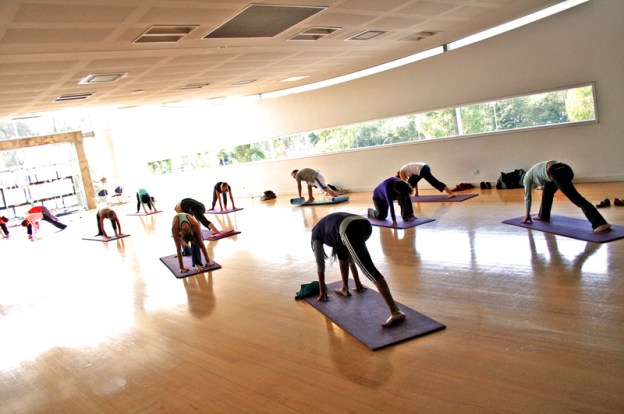
I spotted an uplifting post on the front page of the Huffington Post that was written by a Yogi, V.K. Harber, who has her own studio in Tacoma, Washington. She brought up so many good points about how we all have these unrealistic ideas about the ideal body. And we all do not have to have the perfect body to benefit from yoga. She says it is just the opposite. That most of us do not have the perfect body and that is ok.

I relate to what she is saying. I have been looking for a yoga class that is not “aerobic yoga”, which is my label for competitive, highly challenging and painful. Part of me wants to say, ” no pain, no gain” and tell myself go ahead and aim for that perfect body image. Whip myself into a thin, muscular me. But I think that it just not realistic and I do need to accept that I am not going to look like the popular, health magazine image. (I love the photos, shared by Ms. Harber, of everyday folks doing yoga.)

But that should not stop me from doing some gentle, restorative yoga. I used to do a pretty mean warrior pose.

yoga-32126_640  via Pixabay

Adult with ADHD: What I Wish I Knew As an ADD Child

Image via ADDitude

As someone who is an Education Specialist and works with kids with learning differences, one of my favorite sources for information is ADDitude Magazine online. I love this post written by an adult with ADD looking back on her childhood. She talks about 10 things she wishes she had known and wants us to know about ADD. She talks about how people with ADD do not have an attention deficit but their attention is diverted. She was often told in school that she was not working up to her potential. She has discovered that “the catalyst for potential is passion not just hard work.”

Take a look at the slideshow:

Adult with ADHD: What I Wish I Knew As an ADD Child.