Category Archives: Current Issues

Women’s Liberation-What it was like to be a young woman in the 70s

“Those who cannot remember the past are condemned to repeat it”

–George Santayana

I have been discouraged at times when I read that some women today think it is a negative thing to be a feminist. I have thought about writing more about it.  Just recently my husband’s aunt sent me some historical photos that inspired me to write this post.

It is important for young women today to be aware of the history of women’s rights in the United States. We didn’t have the right to vote until 1920. Women struggled for many years to win that right. When our country was founded women did not have the right to own property.

When the Women’s Liberation Movement started women were blocked from all kinds of jobs considered only suitable for men. There were very few women doctors or lawyers.  Women were not even allowed to run in the Boston Marathon. Here is some biographical info, from her website, on Kathrine Switzer the first woman to run in the Boston Marathon who the officials at that time tried to drag off the race course. “ Kathrine Switzer will always be best known as the woman who, in 1967, challenged the all-male tradition of the Boston Marathon and became the first woman to officially enter and run the event. Her entry created an uproar and worldwide notoriety when a race official tried to forcibly remove her from the competition. The photo of this confrontation flashed around the world.”  Can you imagine that, it makes me nauseated, an official tried to drag her off the race course.  It was during and after the 70s that we had the first women astronauts, more women in medical and law school, and women in leadership positions in business and politics. None of this would have happened without this struggle.

During this time of the Women’s Lib Movement, some women refused to wear bras and would burn bras during demonstrations. This was because bras were thought of as uncomfortable male inventions to make women’s breasts attractive to men.  That is how the feminists were labeled “bra burners.” Women started to learn about their own bodies, some learned to do their own pelvic exams, and to request plastic speculums which were not as hard and cold as metal ones. Women asked to keep their feet down on the exam table instead of propped high up in uncomfortable metal stirrups. Women wanted to give birth on comfortable beds, or in water instead of in a surgical style delivery room with their feet in those metal stirrups.

I read about women’s history in my American History class in college and remember what an eye opener it was and how I admired so much the suffragettes and other women pioneers for freedom. One was Elizabeth Blackwell who was the first American woman MD. When she applied to medical school the dean and faculty put her application up to a vote by the other 150 male students. They thought it was joke and voted to accept her.

I read the book Feminine Mystique by Betty Friedan and Sexual Politics by Germaine Greer. Betty Friedan talked about how women in the 50s who, although college educated, were encouraged to stay at home in the suburbs and were finding something missing from their lives, (like intellectual stimulation).  Women started to question these prescribed roles they were assigned to.

I am grateful that as a young woman I was exposed to these ideas and had women leaders to look up to like Gloria Steinem. Many people may not know that Gloria Steinem once had a job as a Playboy Bunny. She did an undercover assignment, as a reporter, at a Playboy Club in New York. There was later a movie made about this episode in her life. She is quoted in an article in the New York Times that at that time, when she did this reporting, she was not yet aware of her feminism.  Playboy was a popular magazine for young men and the Playboy Club was very popular. The “bunnies” ,(waitresses), wore these low cut costumes, high cut at the bottom, with bunny ears, a puffy white tail and high heels. These were some of the role models women had then.  Films usually portrayed women in very confined roles as well.  A popular film in the 60s was Goldfinger which introduced the “The Bond Girls.”  It is now known that the writer, Ian Fleming , of the James Bond series was a misogynist. But when the first movies came out the James Bond character was very popular. James Bond is portrayed as less sexist in recent years.  I remember seeing the movie Goldfinger  as a teenager. The leading female role was a character named Pussy Galore. I remember thinking that I did not want to identify with her or be like her. I think many young guys did want to be like James Bond. I always liked strong, independent women characters. I recommend that if you are not knowledgeable about your history that you read up on it. When Women’s History courses were first introduced many feminists wanted them to be called  “herstory.”

Gloria Steinem  on being a Playboy Bunny via You Tube by hudsonunionsociety:

https://youtu.be/xRC7x6qRpks

The Myth of the Normal Brain

I want to share an article that Thomas Armstrong Ph.D. wrote in the American Medical Association Journal of Ethics about neurodiversity that proposes that there is no such thing as a “normal” brain.  I have always felt that kids labeled with Learning Disabilities, ADHD, and Autism have learning differences, not learning disabilities. I do not like the way people with learning differences and mental health issues are often pathologized.

A great thing my credential program in Special Education emphasized was to focus on the person’s strengths. And as this article says, everyone has strengths. Kids can actually develop Depression from being labeled and having everyone focusing on their weaknesses.

Dr. Lara Honos-Webb Ph.D. talks about her experience in her article ” Just Down- Not Out!” that many times after kids are diagnosed with ADHD they develop depression. She states, ” Being diagnosed with ADHD often makes a child or adult feel like there is something intrinsically wrong with their brain..that it impacts all areas of their life…, and that the disorder will not go away. In short, an ADHD diagnosis is a formula for developing depression.”

Dr. Armstrong points out all the things that people are labeled for may actually be adaptive in survival and can still be seen as a strength. Dr. Edward Hallowell was one of the first to write a book about ADD and has resisted labeling ADHD as a disorder. He says, ” The best way to think of ADD is not as a mental disorder but a collection of traits and tendencies that define a way of being in the world. There is some positive to it and some negative, some glory and some pain. If the negative becomes disabling, then this way of being in the world can become a disorder. The point of diagnosis and treatment is to transform the disorder into an asset.” (1)

It makes sense that if you label someone as disordered or tell them they have a disorder they are going to be seen as defective and feel defective. I hope more people in education and medicine adopt the attitude that Dr. Armstrong proposes and see these differences as diversity not disorder. And to focus on the strengths when working with kids.

The Myth of the Normal Brain: Embracing Neurodiversity, Apr 15 – AMA Journal of Ethics (formerly Virtual Mentor).

1. Delivered from distraction: getting the most out of life with attention deficit disorder
By Edward M. Hallowell, John J. Ratey
Published by Random House, Inc., 2005
ISBN 034544230X, 9780345442307

Act Your Age

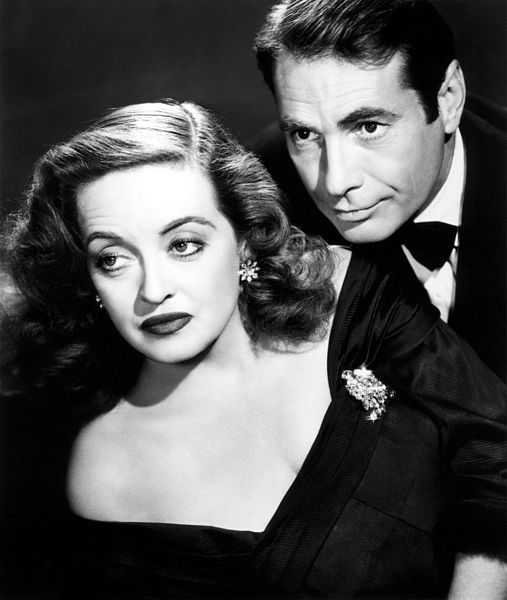
The image on my post is of Bette Davis and Gary Merrill in ” All About Eve.” This film was about a middle-aged actress being undermined by a younger, inexperienced competitor and how Hollywood treats “older” actresses.

We tell kids to “act your age” when we think they are acting immature and older people are sometimes told the same thing. What do we mean when we tell an older person to “act your age?”

I was very happy and humbled to see the response to my last post about Aging Disgracefully. The response made me realize that there are many people out there who are thinking about this issue.

One big reason why I do not like being told about  “aging gracefully” is that I interpret it to be a prescription on how we should all behave and live our lives as we get older. And there are all these assumptions and expectations that come attached to that description of aging. Here is something from Huffington Post: “Want to Age Gracefully? Avoid these 7 Things,” with a photo of George Clooney and Sandra Bullock on the top. The suggestion being that if we want to look like these celebrities, who are obviously “aging gracefully,” we should read the following. And it seems the author thinks being in your 50s is the start of aging. Another post on the  “Gen Fab” blog  called ” Ageing Gracefully: What Exactly Does That Mean? ”  has a photo of Sandra Bullock as Superwoman in the top photo.  They asked women, a group of bloggers nearing and post 50,  what they thought of “aging gracefully.” I liked the slideshow in the post a little better which includes some opinions of the bloggers.

Here’s another post from Huff/Post 50  today: “It’s Hard for Men to Believe I Feel Attractive at 50.” I almost skipped reading it with that title but she did have a few things to say I thought were positive about aging.

Another thing that bothers me is that much is written at older people and not by older people. I would much rather read about the personal journey than what someone thinks that journey should be. So I was happy to read what  some of you shared about how you are living your lives.

How should we “act our age?” I don’t think we have to prove anything, like be a marathon runner, swim to Cuba, or take up aerobic yoga. To me it is a process of self-discovery. If we have been athletes all our lives we may still want to be athletes. But there are so many other things we can do. One reader said she is “creatively aging.”  I am in the process of discovery myself. I have been working a little as a tutor and I am volunteering as a literacy tutor. I am blogging.  🙂  I want to start exploring other possible interests as well.

How do you envision your aging? How do you want to “act your age?”


FYI for the Introverts among us and those who love them  The Quiet Revolution website is getting ready to launch soon.

Aging Disgracefully

I detest labels, stereotypes, and being put in a box. I have always been a bit of a rebel and will fight for your and my right to be different. Oh, how I hate conformity, how people are encouraged to march along in lock step, and never question anything. I hate group think. Pop think. Fads. Everyone following along with everyone else. This all being said, I really liked a post I read by Margaret Manning on her new site Boomerly called  The Secret Life of Modern Grandmothers.  I am not a grandmother yet but I am getting older and refuse to climb into a box , be labeled, and be expected to be any particular way that fits a stereotype of an older person.

I have read all these article about aging gracefully and I bristle. I want to be like the little girl who got her clean, frilly dress covered with mud, and ruined her party shoes. I borrowed the title of this post from Margaret’s post where she mentioned “aging disgracefully.”

Ageing gracefully is not for me. Another writer I follow, Ann Brenoff in the Huffington Post, wrote recently I’m Not Trying to Age Gracefully, So Don’t Pressure Me To. She makes some great points, that we all age differently. Some of us do need to dye our hair because we don’t look good with gray, and we all can’t look like your favorite celebrity, and some people have good genes so that’s why they look younger.  She compares this pressure to “age gracefully” to “fat-shaming.”

I am for all of us, no matter what age, being our glorious, beautiful selves.

Joy To The World and Peace

We need an infusion of joy and to pray for peace in the world. My prayer is that those making war will stop and consider peace. Here are some uplifting inspirations for those of us weary from all war.

From Matt Harding on You Tube:

And Som Sabadell flashmob Banco Sabadell:

I am sharing this post on Lindaghill for Stream Of Consciousness Saturday to say “No” to hopelessness, negativity and to the dream killers of the world. And say “Yes” to all the good in the world.

socs-badge

It’s Good To Be Quiet

For many years I did not realize that many of my traits were related to my temperament. That I am an introvert, empathic and highly sensitive. I knew that small talk and large social gatherings exhausted me. I knew that I relished time alone and needed time to recover after a busy day of activities especially if those activities involved interacting with people. I think other people had a hard time understanding this behavior. Once I understood it was part of my temperament, and that it was ok to be this way, it made it easier for me to accept myself.

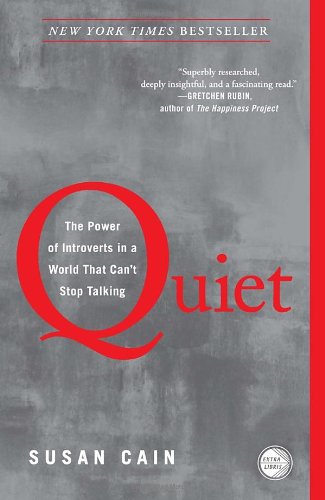
Susan Cain wrote this book, “Quiet,” about introverts and of course I read it. Now Susan Cain is starting up a Quiet Revolution Community website . It is scheduled to launch in April. Here is what she said about it:

“Our intention in building this space is to share and encourage each other. One of my favorite parts of the new site is a big new art project called Quiet Revolutionaries. This project is all about you, featuring you. Quiet Revolutionaries is an ever-expanding photo essay of people who have thought about what it means to have a quiet consciousness and/or to draw on their own quiet strengths. Our goal is to inspire, connect and celebrate our thoughtfully vibrant community.”

In a TED Talk Susan Cain explains traits of introverts and talks about how our society has not traditionally seen this as a positive trait and that the needs of introverts in schools and work places have been ignored. The idea of constantly working in groups is seen as the ideal. She makes some good points about how it may not be the ideal.

In a post about The Quiet Revolution on her website she talks about plans to redesign the workplace and school environments to be more in line with the needs of introverts, and develop the leadership skills of introverts in the workplace.

This is interesting and worthwhile information for introverts and the people who love them. It is worthwhile for parents and teachers to be aware of this as well.

Bravery

images autism via academicconcepts.org on creative commons

Children with special needs and learning differences do have to fight big battles every day. They are trying to relate to a world which often does not make any allowances for their differences. A world where they are seen as strange and not accepted.

They struggle to engage with the lessons that are presented to them in the classroom. Their learning styles or best way of accessing the material may not be taken into consideration.

The pace at which the material is presented may be too fast and not repeated enough for them to be able to process it.

They may have sensory needs and sensitivities that are impacted. They can be distracted by a noisy classroom or the noise itself can be painful for sensitive ears.

They may struggle to answer questions when called upon because it takes them a longer time to formulate their response.

They may prefer to work alone but are often required to work in groups where there are demands for social skills that they lack, and with other children who are more naturally adept in group interactions.

They may need down time, sensory breaks, and just plain time alone to regroup, recharge, and not be given those breaks.

With all the stresses that are not understood by others, kids can start acting out and have meltdowns. Their behaviors are not understood or easily tolerated by the other kids and the teacher. So that causes them to stand out again as different or strange.

The IEP report stated ” He comes to school every day with a smile on his face and ready to work.”

That is what I call bravery.

Over 55 and Need Help with Paying for Perscriptions, Food, Utilities and Other Basic Needs?

This is heartbreaking to think about that there are older people in America who need this kind of help. But I am glad there are agencies such as National Council on Aging that will help. According to NCOA:

“Many adults over 55 need help paying for prescription drugs, health care, utilities, and other basic needs. There are over 2,000 federal, state and private benefits programs available to help. But many people don’t know these programs exist or how they can apply.”

Thank you to the EngAGE blog for sharing this information and I am passing it on. If you or someone you know needs this help you can go to NCOA to find out how to apply for benefits.

Woman Smiling