Category Archives: Nature

The Full Worm Moon

March is the beginning of Spring and according to The Old Farmer’s Almanac the first Full Moon of March is called Full Worm Moon by Native Americans. This is because Spring is the season when the earth gets warmer and the worms are supposed to return. You may ask where did the worms go during the winter? It turns out earthworms burrow down deep below the frost line and sit out the winter below ground. Other species of garden worms lay eggs and die. In the Spring, their eggs hatch. I have been digging around a little in my small patch in the backyard and I realize I haven’t come across any worms yet. I dug a hole to plant our new lime tree and just did battle with that Palm tree I told you about, and dug it up, but I did not see any worms. The worms are supposed to attract birds and I have seen various birds pecking around in the yard but they could be eating other insects or seeds. I am now officially on worm watch. Maybe it’s due to global warming.  😉


Stream of Consciousness Saturday is hosted by Linda G Hill. The prompt word is “march.” Featured image of ‘Robin catching worm in Spring’ via wikimedia.

In My Garden-Volunteers

” I do some of my best thinking while pulling weeds.”- Martha Smith

Volunteer-“In gardening and agronomic terminology, a volunteer is a plant that grows on its own, rather than being deliberately planted by a farmer or gardener. Volunteers often grow from seeds that float in on the wind, are dropped by birds, or are inadvertently mixed into compost.” (Wikipedia)

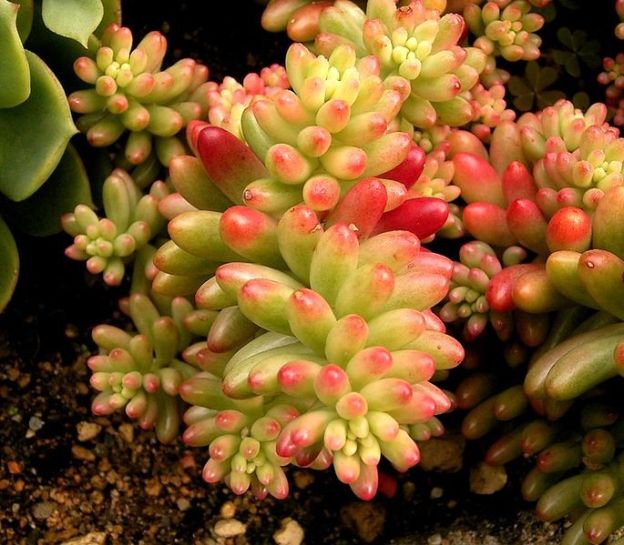
I have a couple of plants in my garden that are popping up without any help or encouragement from me. We did plant one of them but it is popping up in other spots. I have identified it as Sedum rubrotinctum aka Jelly Bean or Pork and Beans plants. Here are some photos of mine:

I think there were more that I pulled up when they were babies because I thought they were some kind of weed.  Another plant (tree) that grows like a weed are Palm trees. If you have a Palm tree anywhere nearby you will find little Palm tree seedlings popping up like weeds all over your yard. And you have to be vigilant in pulling them out or pretty soon you will have a tree where you may not want one. We ended up with a huge Palm tree against our wall, from a volunteer like that, and another one in our front yard.

This is what they look like if you catch them early:

Palm Tree Seedlings

As I was surveying the plants in my backyard,  I came across this hiding under some other bushes against one wall:

We will have to dig it up or end up with a much bigger tree in the near future.

In a recent post I mentioned there was clover growing in my garden, which also is a volunteer. I was thinking a neighbor may have some clover in their garden and the seeds spread to mine. Well, while researching the type of “clover” it might be, I discovered it is not clover but something called “Yellow wood sorrel” or Oxalis stricta. It grows wild so it is a volunteer. In small amounts it can be edible and medicinal. It is sour tasting and  a thirst quencher if you chew a bit of it.  The leaves close up in bright sun. I noticed some of the “clover” leaves were doing that too.  I like the look of it but I don’t necessarily want it to take over the backyard, but it is pretty and has a pretty name ‘wood sorrel.’ I am going to have to look for a different ground cover to fill in the bare spots. I took some photos of the sorrel this morning. You can see some of the leaves partially closed. The yellow flowers are closed this morning. We had rain yesterday and the sun is not so bright right now, a little cloudy today.

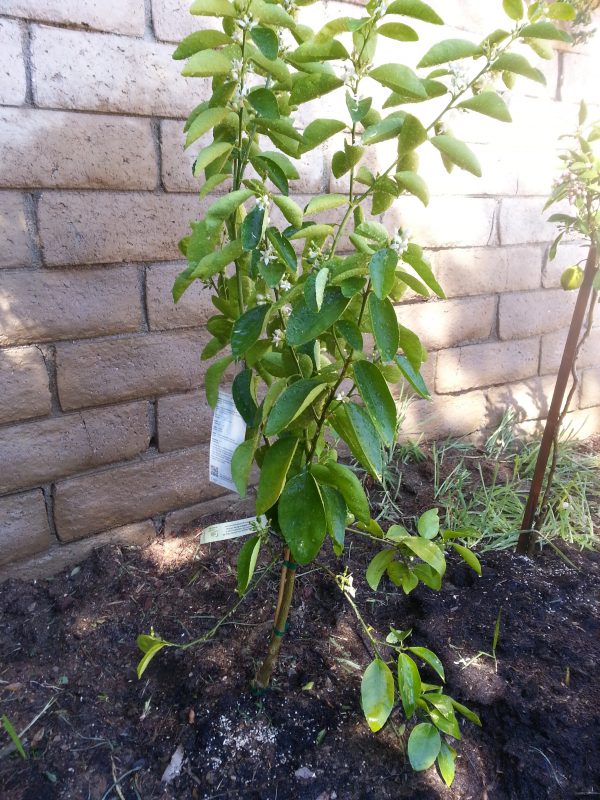
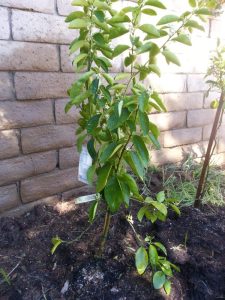
Some good news is that we planted our Lime tree.
And the Sage plants are doing well and really blooming:


Featured Image of Sedum r. by Frank Vincentz via Wikipedia.  One Liner Wednesday is hosted by Linda G Hill.

#1linerWeds badge by nearlywes.com

Nature Therapy

32604113543_412376ff66_z

Goosenecks State Park Overlook photo by Bob Wick


“The 1.35 million-acre Bears Ears National Monument in southeastern Utah protects one of most significant cultural landscapes in the United States, with thousands of archaeological sites and important areas of spiritual significance. Abundant rock art, ancient cliff dwellings, ceremonial kivas, and countless other artifacts provide an extraordinary archaeological and cultural record, all surrounded by a dramatic backdrop of deep sandstone canyons, desert mesas, and forested highlands and the monument’s namesake twin buttes. These lands are sacred to many Native American tribes today, who use the lands for ceremonies, collecting medicinal and edible plants, and gathering materials for crafting baskets and footwear. Their recommendations will ensure management decisions reflect tribal expertise and traditional and historical knowledge.”-Bob Wick of the US Bureau of Land Management about his photo on Flickr

In My Garden-Magical Things

“The universe is full of  magical things patiently waiting for our wits to grow sharper.”                – Eden Phillpotts

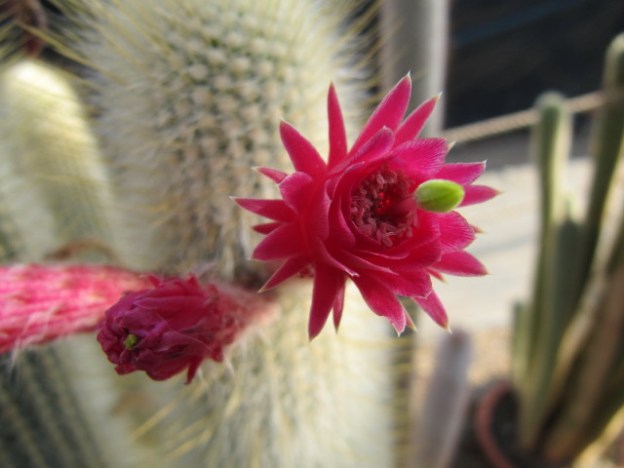
I noticed something on the top of one of our cactus plants and on closer inspection I saw these bright pink protuberances:

I think I mentioned before that we did not save the tags for most of our plants and this makes it hard to identify them later.  However I have been doing a bit of research and believe I have identified a couple more of the cacti/succulents. The image above is of Cleistocactus hyalacanthus.

One of the other succulents in the front yard has a large light green flowering stalk growing out of it right now. I identified this plant as Kalanchoe luciae aka Paddle Kalanchoe, Paddle plant, Desert Cabbage, Flapjacks, and Red Pancakes ( named for the shape and color of the leaves):

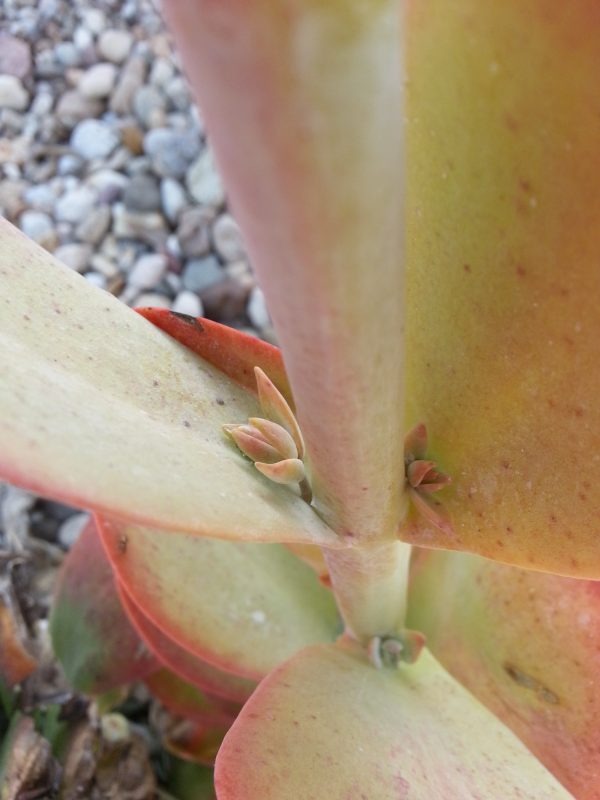
I have been reading up on the Kalanchoe and I can grow many more plants from the mother plant. Here, in the image below, are some of the baby plants that can be harvested and repotted. Can you see them tucked into the bottom of the leaves?

While researching some images of kolanchoe I found ( an image by Nova on Wikipedia) of one of my backyard succulents is called Kolanchoe tormentosa:

Kalanchoe tormentosa

We have been converting our front and backyards to drought tolerant landscapes. The front yard has a low flow drip sprinkler system. Happy to have something that is low maintenance with our rock ground cover, pavers and drought tolerant plants.


One Liner Wednesday is hosted by Linda G Hill. Featured image Cleistocactus in flower by Leonora Enking on Flickr. I hope my cleistocactus flowers will open up like that. 🙂


Bears Ears

I recently posted some gorgeous photos of Bears Ears National Monument that I discovered from the US Dept of Land Management. I also wrote I did not think this land was threatened by development, oil drilling, or fracking. I must have been having my intuition alerting me that this land could be threatened because some politicians in Utah want the protections of the National Park removed. I happened to see a video presentation by Patogonia on the PBS website. I am going to share what I am finding out now. Our National Parks and open, natural spaces must be protected. Latest interactive video on Bears Ears.


In My Garden Small

“However many years she lived, Mary always felt that ‘she should never forget that first morning when her garden began to grow’.”
― Frances Hodgson Burnett-The Secret Garden

I have been wanting to get back into my small backyard garden and now that the weather is getting nicer I have been going out.  I have been weeding periodically and I am noticing that the succulents I planted are growing and some are blooming. I was excited to see this one with a big stalk shooting up:

And I did not remember the name of the plant. Then I noticed it had a tag:

Gasteria arborescens

Here are a few more of my succulents:

And here’s some of my wooly thyme ground cover. I will probably plant more because it has not covered as much of the space as I hoped it would:

The sage plants are doing well:

Cranberry Sage

I have a dwarf lime tree that I need to plant:

It’s nice to see that these plants are doing well even though I am new at this.  I plan to scale the retaining wall this weekend, ( don’t worry it is not too tall), dig a hole in the terrace, and plant the lime tree. I hope it likes it there.

Today is International Women’s Day # HerVoiceIsMyVoice:


This post is my contribution to One Liner Wednesday hosted by Linda G Hill. Featured image is of  my backyard garden path.  🙂

#1linerWeds badge by nearlywes.com

Water

A whole lot of water over this dam
For the first time in Lake Oroville’s history, overflow is sent down an emergency spillway.
WATER RUSHES down a hillside from the emergency spillway at rain-swollen Lake Oroville, depositing mud and debris into the Feather River. (Brian van der Brug Los Angeles Times)
By Bettina Boxall and Patrick McGreevy

“More than 10 million salmon were evacuated from the Feather River hatchery downstream because the river water had grown too muddy for them.”

Northern CA’s Oroville Dam, the nation’s tallest dam ( 770 ft):


So Beautiful

So if you’re wondering why so many people in the US want to preserve our national heritage of beautiful open spaces and not have oil drilling or fracking allowed in these parks, take a look at some of the US Bureau of Land Managment photos. I plan to browse through their photo albums almost as a meditation. I am starting with these below from Bears Ears National Monument, Utah:

This slideshow requires JavaScript.

“Those who contemplate the beauty of the Earth find reserves of strength that will endure as long as life lasts.”— Rachel Carson


Sream of Consciousness Saturday is hosted by Linda G Hill. Images from US Dept of Interior, Bureau of Land Management “Your Public Lands.”

Leavings

When you walk through a grove of trees, depending on the type of trees, you are walking over fallen leaves, twigs, small cones, pine needles,and dead foliage and such. The twigs,leaves, and cones crunch under your feet yet muffle the sound of your step and release a woodsy frangrance. Besides providing a fragrant carpet these leavings return nutrients to the earth. Let me leave something that contibutes to life.

Did you see the Google Doodle about Fred Korematsu?  January 30 is Fred Korematsu Day in California, and he would have been 98 years old. He died in 2005. He was a civil liberties activist who fought against the internment of the Japanese during WWII. I don’t know how he survived psychologically all the oppression he experienced, but he did. What an inspiration he is. If I could have a fraction of his courage. Click on the links and read about him, you won’t be disappointed.


This is the last entry for JustJotItJanuary hosted by Linda G Hill. The word prompt for today is ” detritus ” suggested by Lorraine of Lorraine’s Frilly Freudian Slip https://myfrillyfreudianslip.wordpress.com/

I have aimed to keep my posts positive lately in hopes of uplifting spirits. We are in an unsettling transition time that feels like the ground is moving under our feet. We must speak up if we think something is wrong. Featured image is of ‘Fallen Giant Sequoia cones and foliage; Sugar Pine and White Fir foliage; other woody debris’ by Walter Siegmund via wikimedia. Photo taken at Mariposa Grove, Yosemite, California.